Where to Find Fall Color in Orange County (And When It Actually Shows Up)
Every October somebody I know posts a photo from Vermont. Maple trees the color of a fire truck, a kid in a chunky sweater, the whole production. And every October I look out the window at a tree that is defiantly green and think: why can't you be like those Vermont trees.
We do get fall color here. Real color, the kind that makes a photo look like a season instead of the usual 72 degrees and sunny. It just arrives late, it arrives in a specific order, and almost nobody knows where to stand when it does. The answer is never right up against the tree.
I worked most of this out by driving to a park too early and photographing a green tree while sweating through my fall sweater. Here is everything I have figured out since.
I have photographed a green tree in a fall sweater. I am not proud of it.
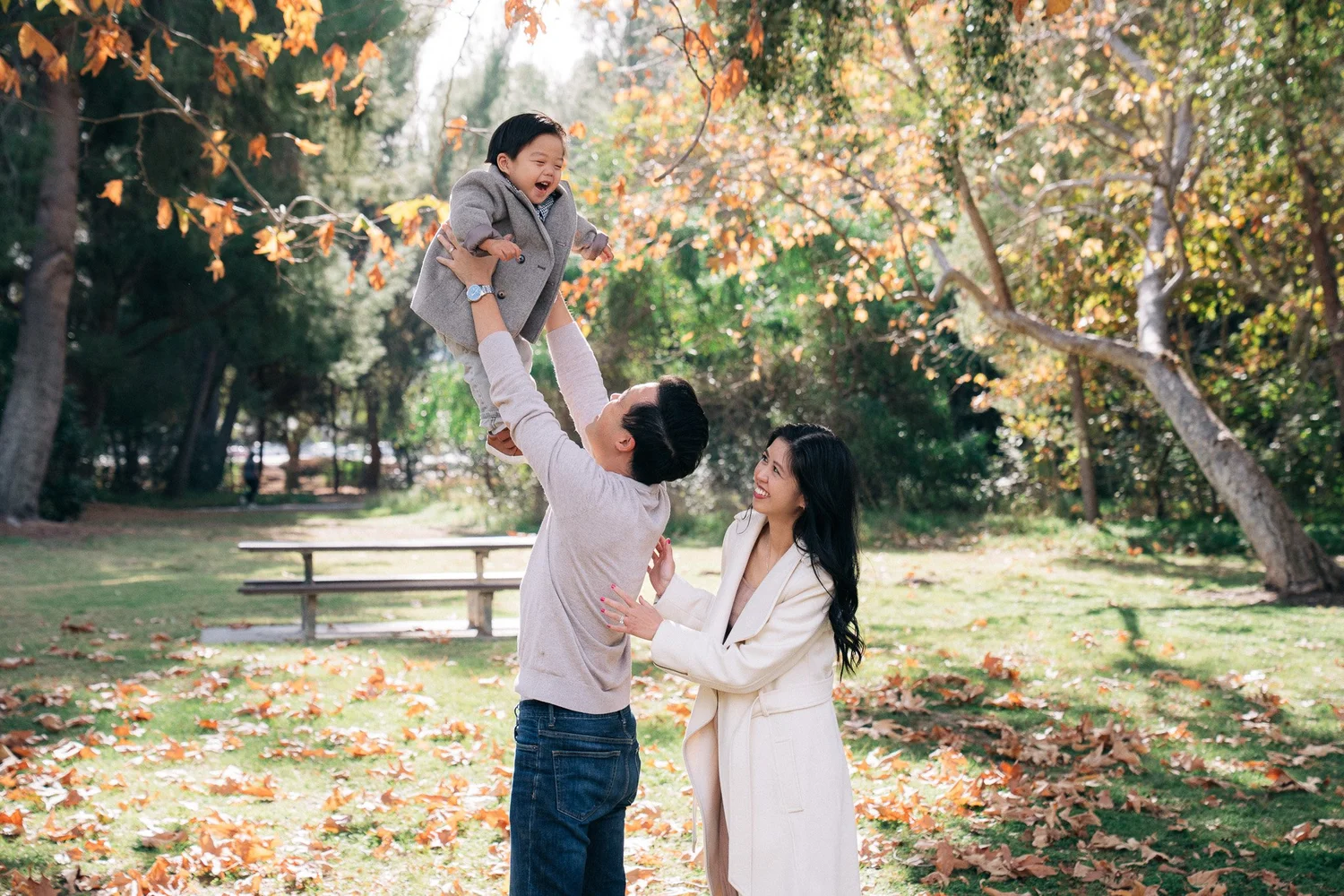
I · The science, briefly
Trees don't turn colors. They stop hiding them.
the only botany in this whole post. then we go look at parks. promise.
The yellow and the gold were in the leaf the entire time. All summer they sit underneath the chlorophyll, which is green, extremely loud, and takes up the whole room. When the nights get longer the tree stops making chlorophyll, the green drains away, and the gold that was always in there finally gets a turn. The tree is not putting a color on. It is taking one off.
The deep reds are a different process, and they need genuinely cold nights, the kind that drop under about 45 degrees. Orange County nights in October are 62 degrees, which is beach weather in Vermont. So we mostly skip that part.
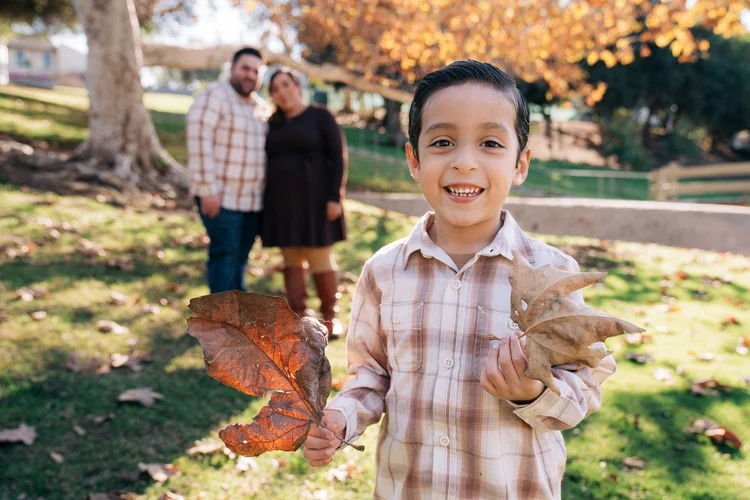
What that means for your photos. Our fall is gold, amber, rust and brown. That is the whole palette, and as somebody whose actual job is making skin tones look good, I consider it a gift.
Gold agrees with warm afternoon light instead of arguing with it. It is the same family of color as the light itself at four in the afternoon, so the background and the light and the faces all cooperate. Nobody in the frame ends up looking sunburned.
If you do spot a proper red tree around here, look closer and it is almost always in somebody's front yard. Liquidambar and Chinese pistache are neighborhood trees, not park trees. Lovely on a residential street. Not what you will find on a trail.
II · The pattern
Orange County has two falls, not one.
this took me longest to notice, and it's the single most useful thing in this post.
The first fall belongs to the planted trees. Landscaped city greenbelts, ornamentals from places with real winters, installed here and asked to perform in a climate nobody consulted them about. They sit on irrigation, they run a little stressed, and they go early.
The second fall belongs to the natives along the water. Sycamore, cottonwood, willow. These have their roots in a creek bed, they are in no hurry at all, and they hold green long after everything else has quit. Then they go gold in December and January while the rest of the county is decorating an entirely different kind of tree.
I noticed this before I understood it. The trees along Jeffrey Open Space Trail in Irvine start turning early, sometimes as early as September, and they are mostly bare by December. Yorba Regional in Anaheim, sitting right on the Santa Ana River, goes much later. Same county, same month, two completely different photographs.
Which is good news, because it means you do not get a frantic two week window. You get about three months, provided you are standing in the right park.
III · The cast
Four trees doing all the work.
learn the sycamore and you're basically done.
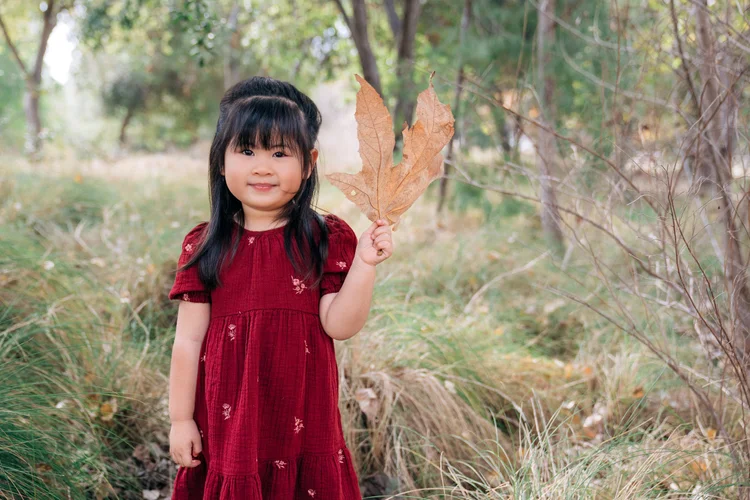
These are the trees you will actually meet on an Orange County trail. Not one of them turns red. All of them turn gold, and gold is what you want anyway.
It is in nearly every park on this list, it is enormous, and its leaves are the ones your kids will pick up without anyone suggesting it.
Western sycamore, the workhorse
Native, enormous, pale mottled bark, and leaves roughly the size of a dinner plate. It is in Riley, it is in Irvine Regional, it lines the creeks almost everywhere. Goes gold and rust and holds it for weeks. If you have seen a kid in one of my galleries holding a leaf bigger than their own head, that was this.
Coast live oak, the backdrop
Cheating slightly, because this one never turns. It is evergreen, dark, and enormous. But it is the reason our gold reads as gold: put a sycamore in front of an oak grove and the warm leaves separate against all that deep green. Without the oaks, our fall would look washed out.
Fremont cottonwood, the one by the water
Butter yellow, tall, and it only grows where there is genuinely water, which is why it belongs to the Santa Ana River corridor. Leaves quiver in the smallest breeze, which is lovely in person and a nuisance at slow shutter speeds. Ask me how I know.
Red willow, the closer
Which turns gold, not red. Botanists. It is creekside, it is the last thing standing, and it is still going in January along Santiago Creek after every other tree in the county has called it a year.
IV · The order
Where to go, and roughly when.
Two honest caveats first. These shift by a few weeks every year depending on how the summer went and when the first cool nights land. And a park that has dropped its leaves has not stopped being beautiful, which I will get to.
Irvine · October
Jeffrey Open Space Trail
The early one. Planted ornamentals along a landscaped corridor, turning while the rest of us are still in shorts. Go looking in October. Mostly bare by December.
Anaheim · November into December
Yorba Regional Park
The middle of the season and my personal favorite. Sits on the Santa Ana River at the mouth of the canyon, with four lakes to put behind you. Worth knowing that the gates shut at six in fall and winter, which is closer to the good light than you would like. Holds well into December.
Orange · December into January
Irvine Regional Park
The late one. Old sycamores and willows along Santiago Creek, and it is not unusual to find real color here in January. If you missed everything else, this is your park.
Coto de Caza · Any of it
Thomas F. Riley Wilderness Park
Old groves of sycamore and coast live oak along two seasonal creeks. There is a trail there literally called Sycamore Loop. Quieter than the rest, and worth the drive for a frame with nobody else in it.
the trees did not consult the calendar. neither did I. we're working it out.
by the time orange county actually turns, most families have already taken their fall photos.
V · The part nobody plans for
The best photos happen after the leaves fall.
a child has never once looked up at a tree. not in three years. they care about the pile.
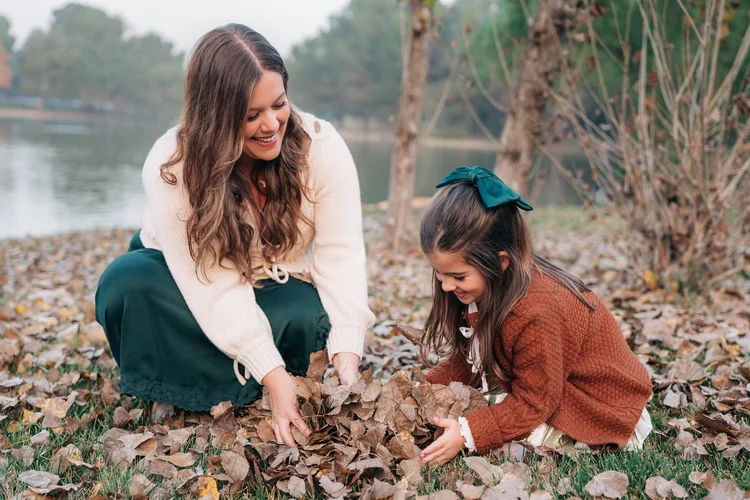
Everyone books fall photos hoping for a canopy. Fair enough, a canopy is lovely. But a canopy is one photograph and it is over your head, which means your family is standing underneath it looking normal.
The floor is where the session actually lives. A lawn buried in dry sycamore leaves is a giant gold reflector throwing warm light back up into everybody's face, and it turns the whole ground into something to do.
So if you get to a park and the branches are bare, do not turn the car around. Some of my favorite frames all year came from a park that was technically finished.
VI · The practical bit
You need one good tree, not a forest.
this is the thing that saves most sessions, and it's why the answer is never to stand right up against the tree.
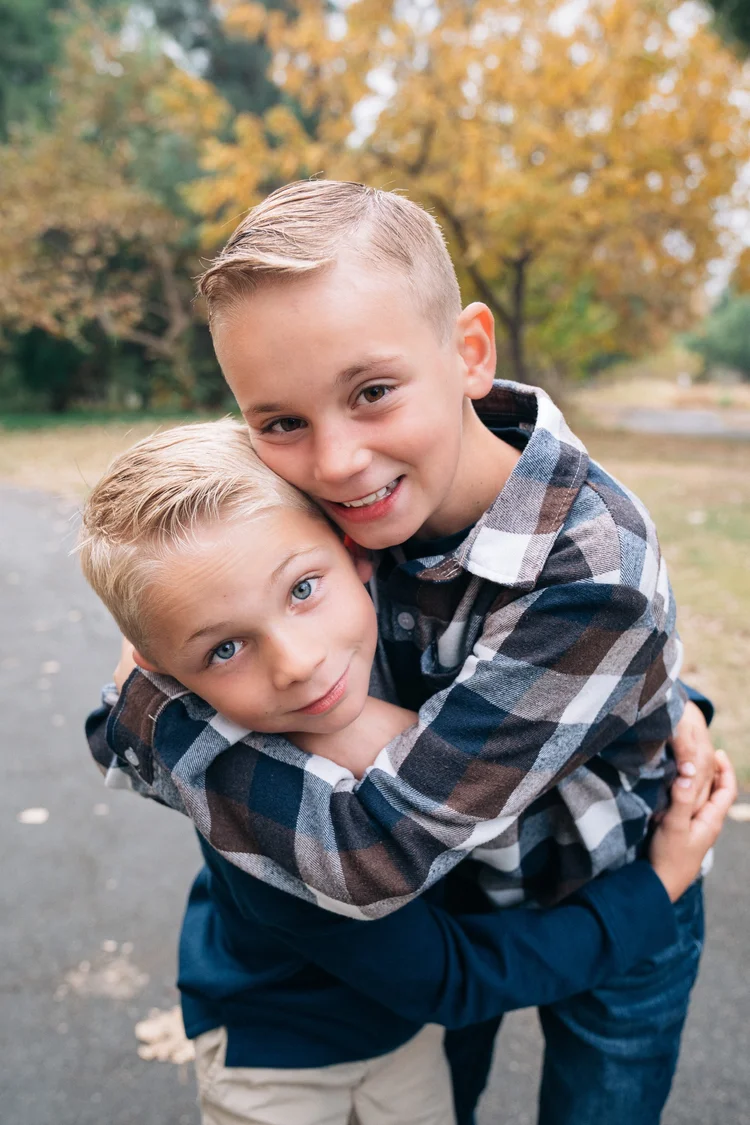
You are photographing people, not a landscape. The color only has to exist in the background. One decent tree, a long lens, and real distance behind your family, and that single tree melts into a wall of gold that looks like it runs for a mile.
Which is why I stopped chasing peak color and started chasing good light with something warm behind it. Late afternoon does most of the work regardless. The leaves are a bonus, not the plan.
Wardrobe matters more than usual against a warm background, and that is its own subject. I wrote it up over at what to wear for family photos.
VII · The short version
If you skipped to the end.
We run about two months late.
Our nights do not get cold enough until deep into November, so peak here is late November through January.
Two seasons, not one.
Planted greenbelt trees go first, native creek trees go last. Jeffrey early, Yorba middle, Irvine Regional late.
Expect gold, not red.
The red trees are in people's front yards. The parks go gold, which is kinder to faces anyway.
Bare branches are not a lost cause.
The leaves on the ground do more for a family photo than the ones still on the tree.
One tree is enough.
Distance and a long lens turn it into a whole forest. Do not stand under it.
Family sessions
Let's go find the good tree.
I shoot these parks all season, and I know which ones have turned. If you want fall photos that actually have fall in them, let's talk about timing.
See family sessionsSee you out there, probably in December.
Daniel Wesley